
1 Introduction
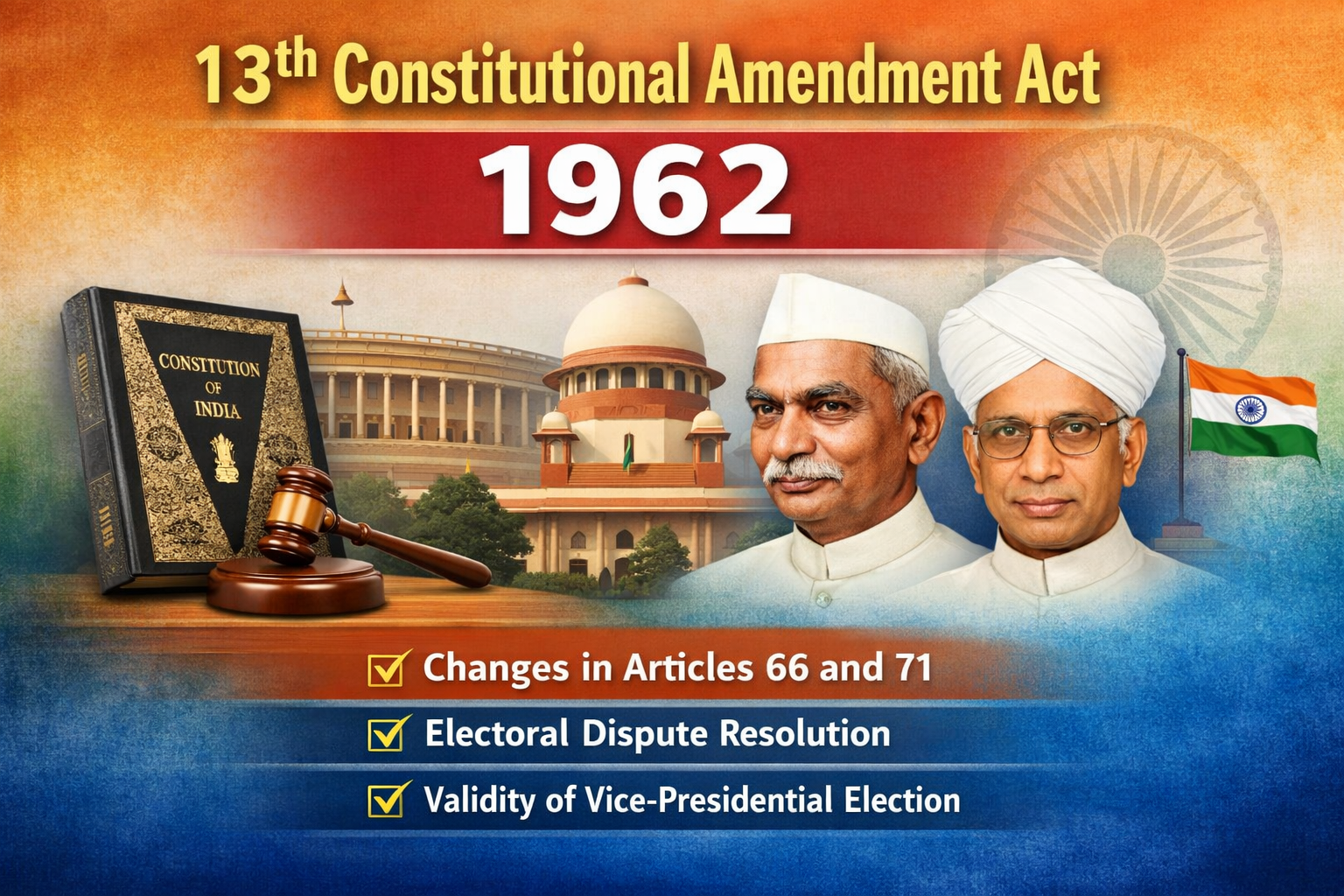
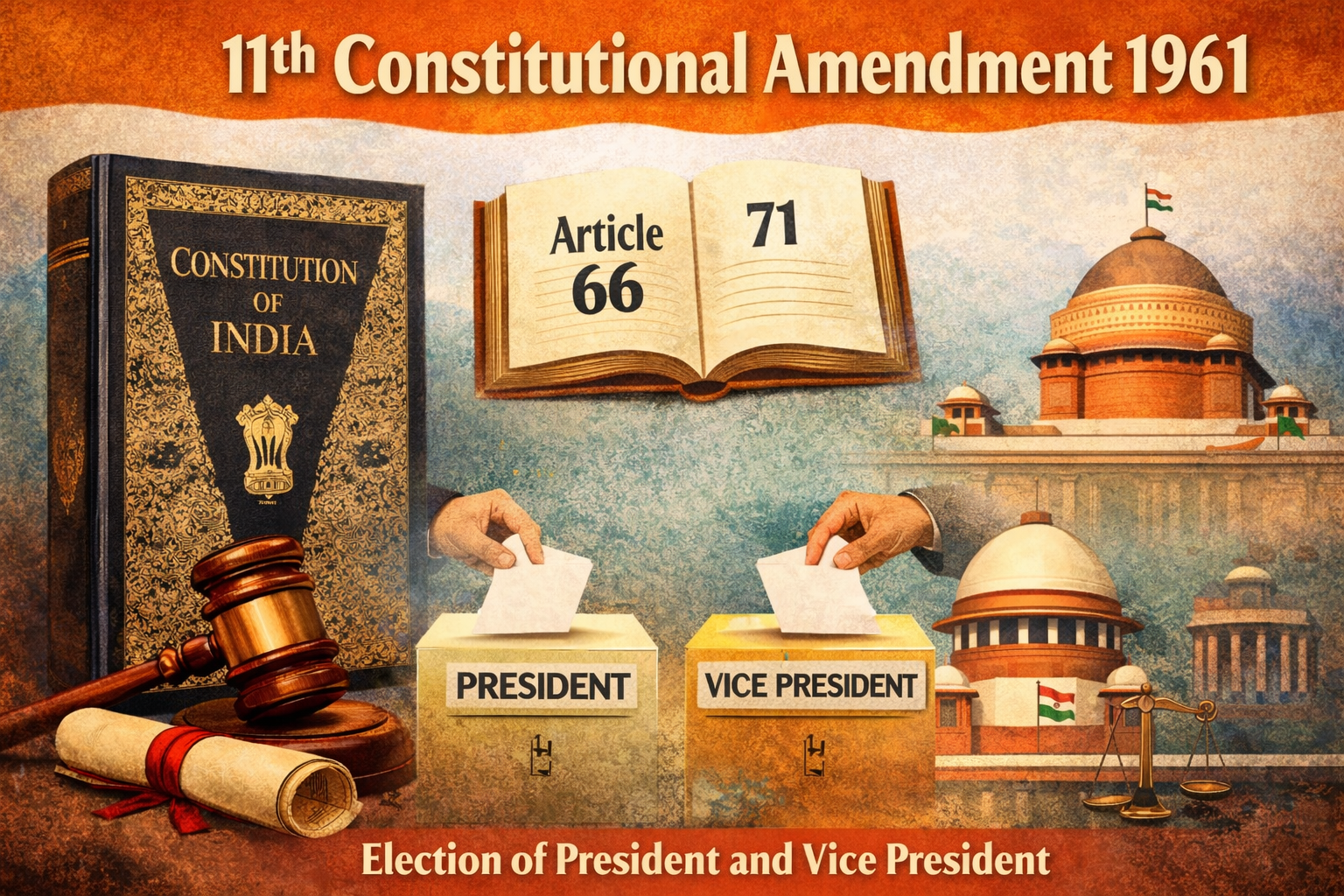
The 13th Constitutional Amendment Act 1962 amended Articles 66 and 71 of the Constitution of India to remove procedural uncertainties relating to the election of the Vice President and the adjudication of disputes concerning the election of the President and Vice President. Its core objective was to ensure that vacancies in the electoral college do not invalidate such elections. By addressing technical ambiguities, the amendment strengthened parliamentary democracy, safeguarded institutional continuity, and enhanced the stability of constitutional offices. It represents a significant phase in India’s constitutional evolution where procedural clarity was prioritized to maintain the uninterrupted functioning of democratic institutions.
2 Historical Background and Constitutional Context
Originally, Article 66 provided for the election of the Vice President by members of both Houses of Parliament, while Article 71 vested the power to decide disputes relating to Presidential and Vice Presidential elections in the Supreme Court. However, the Constitution did not explicitly clarify whether vacancies in the electoral college could invalidate an election. This gap created potential constitutional uncertainty. Administrative and legal concerns required clarification to prevent disruption in the functioning of the highest constitutional offices. Consequently, the amendment was enacted under Article 368 to ensure certainty and avoid technical challenges to the validity of elections.
3 Constitutional Provisions and Legal Changes
The amendment modified Article 66 to clarify that the election of the Vice President shall not be questioned on the ground of the existence of vacancies in the electoral college. Article 71 was also amended to reinforce that disputes relating to such elections fall exclusively within the jurisdiction of the Supreme Court and that elections cannot be invalidated merely due to vacancies. Articles 54 and 55 govern the election of the President, while Article 66 governs the Vice President. The post amendment position clearly ensured that the validity of elections is not affected by incomplete electoral colleges, thereby strengthening procedural stability compared to the earlier framework.
4 Contemporary Relevance
In recent Presidential and Vice Presidential elections, issues regarding vacancies in legislative bodies and electoral college composition have periodically arisen. The amendment ensures that such vacancies do not stall the electoral process or create constitutional crises. It reinforces institutional continuity and prevents unnecessary litigation, thereby supporting democratic stability.
5 Analysis from UPSC Perspective
Procedural amendments are essential for effective constitutional governance. The 13th Amendment highlights constitutional morality by preventing technical objections from disrupting democratic processes. It strengthens separation of powers by affirming Supreme Court jurisdiction under Article 71 and ensures smooth parliamentary functioning. It also reflects cooperative federalism by maintaining clarity in elections involving legislative institutions.
6 Challenges and Issues
Debate regarding indirect election of constitutional heads
Concerns about incomplete electoral colleges
Judicial intervention limits in election matters
Ensuring political neutrality of constitutional offices
Limited public awareness of constitutional procedures
7 Way Forward
Enhancing public understanding of indirect elections
Ensuring timely filling of legislative vacancies
Strengthening transparency in constitutional processes
Preserving judicial independence in electoral disputes
Reinforcing institutional accountability
8 Significance for Exams
For Prelims
Year 1962, Amended Articles 66 and 71
Concerned Vice Presidential election and dispute resolution
Election not invalid due to vacancies in electoral college
Supreme Court has exclusive jurisdiction under Article 71
Passed under Article 368
Linked conceptually to Articles 54 and 55
For Mains
Analyse procedural safeguards in constitutional democracy
Examine role of Supreme Court under Article 71
Discuss indirect election system in India
Link with constitutional morality and institutional stability
Similar themes have appeared in questions on election of President, role of Vice President, electoral college and dispute resolution
For Interview
Importance of procedural certainty in democracy
Balancing legality with continuity
Judicial role in preserving constitutional integrity
9 Previous Years Question Pattern Analysis
Prelims questions generally focus on amendment number, year and Articles affected. Mains questions demand analytical linkage with federalism, parliamentary democracy and constitutional stability. State PSC examinations emphasize factual clarity regarding Articles and years. A common trap is confusing provisions relating to the President and Vice President.
10 In Short
The amendment clarified doubts in Vice Presidential elections.
It ensured elections remain valid despite vacancies.
It strengthened institutional continuity and judicial oversight.
Comments (0)
Leave a Comment