
Early Life and Education
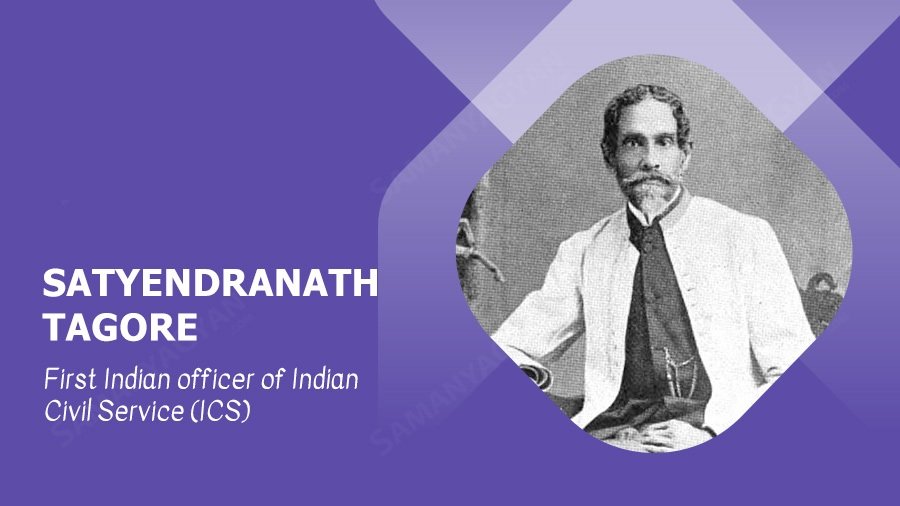
Satyendranath Tagore was born on 1 June 1842 into a
progressive Bengali family. He was the elder brother of the renowned poet and
philosopher Rabindranath Tagore.
He grew up in an intellectual environment deeply influenced by modern thought,
literature, and social consciousness. This background later shaped him into a
prominent social reformer and a source of inspiration.
Entry into the Indian Civil Service
In 1863, Satyendranath Tagore cleared the Indian
Civil Service (ICS) examination, introduced by the British, and became the first
Indian to join the ICS.
At that time, this exam was considered extremely difficult and almost
impossible for Indians to pass. His success not only brought pride to his
family but to the entire nation.
His achievement instilled confidence among Indian youth that they too could
secure positions in the highest administrative services through merit and
determination.
Social Reform and Women’s Status
Satyendranath Tagore’s life was not confined to
administration alone. He was deeply engaged in social reform movements.
He played a vital role in improving the social status of Indian women
and promoting female education.
He strongly believed that without educated and independent women, the true
progress of society would remain incomplete.
Contributions to Literature, Music, and Language
Satyendranath Tagore was a man of multifaceted talent:
- He was
a writer and composer.
- He had
deep command over languages and made several contributions to literature
and culture.
- He was
part of the Bengal Renaissance generation, which guided India
toward modernity and progressive ideas.
Conclusion
Satyendranath Tagore was not only the first Indian to
join the Civil Service but also a reformer, cultural figure, and
inspiration.
His life teaches us the importance of fulfilling social responsibilities even
while occupying high positions.
For today’s civil service aspirants, his struggle and dedication serve as a guiding
light and source of motivation.




Comments (0)
Leave a Comment