
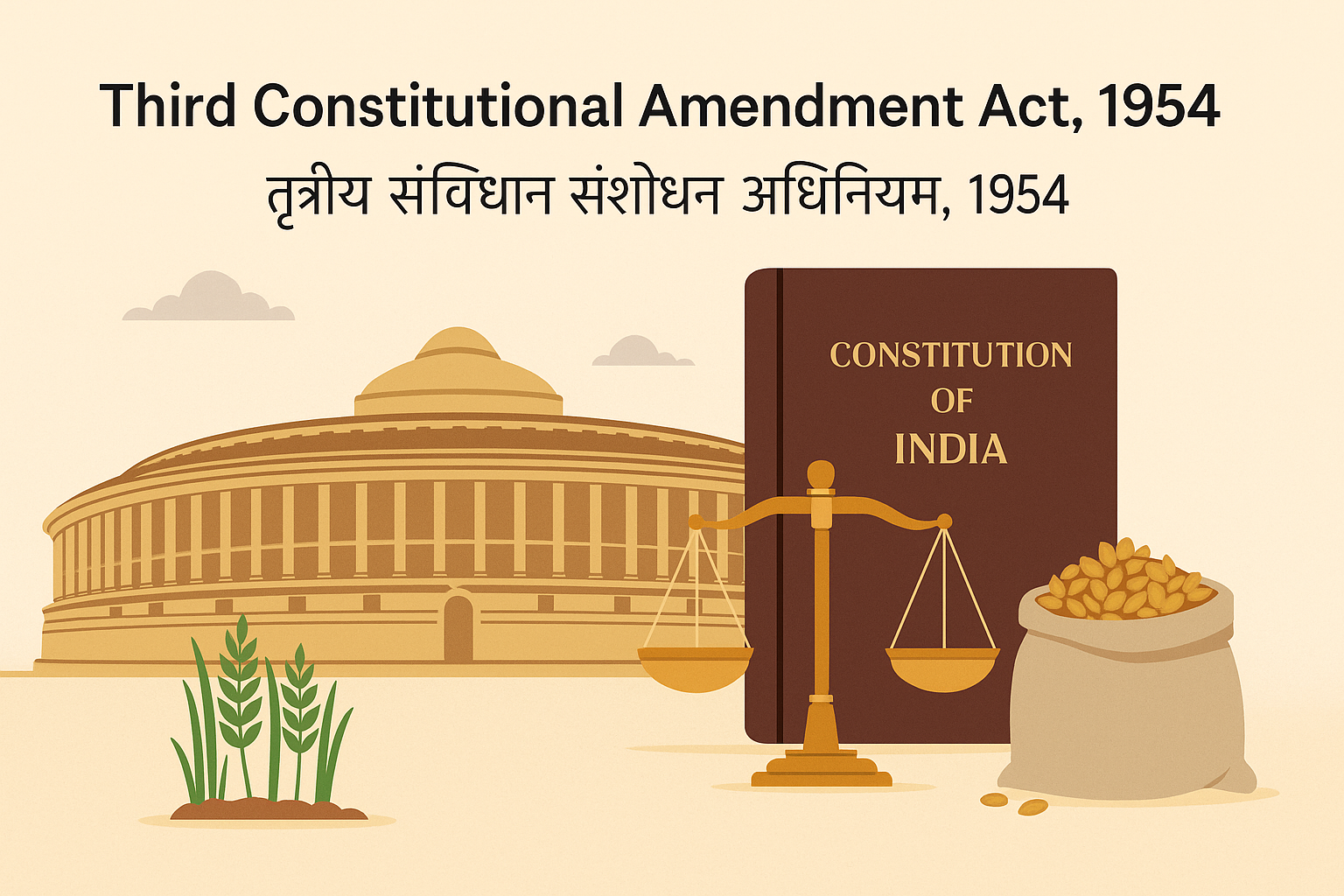
Background
- The
Constitution of India came into force on 26 January 1950.
- Soon
after, the government initiated land reform measures to abolish zamindari
and redistribute land.
- However,
courts struck down some state land reform laws on the grounds of violation
of the right to property.
- To
protect such laws and strengthen agrarian reforms, the Third
Constitutional Amendment Act was passed in 1954.
Main Provisions and Key Facts
- Amended
the Seventh Schedule to transfer certain subjects between the Union and
State Lists, especially with regard to trade and commerce in commodities.
- Empowered
the State legislatures to impose reasonable restrictions on the freedom of
trade, commerce, and intercourse in the public interest.
- Ensured
that Parliament and State legislatures could make laws relating to trade
in essential commodities.
- Strengthened
the constitutional backing for land reforms and agrarian laws.
Significance
- Gave
legal protection to land reform laws which were necessary for social
justice and redistribution of land.
- Clarified
the balance of power between the Union and the States on trade and
commerce.
- Helped
the government continue with policies of economic restructuring after
Independence.
Criticism or Limitations
- Critics
argued that repeated amendments to protect land reform laws diluted the
sanctity of Fundamental Rights.
- Some
viewed it as excessive legislative power at the cost of individual rights.
Key Points for Exams
- Year:
1954
- Amendment:
Third Constitutional Amendment Act
- Focus:
Land reforms, trade and commerce, Seventh Schedule
- Articles
affected: Articles 31, 305
- Purpose:
To protect agrarian reform laws and regulate trade and commerce
In Short
The Third Constitutional Amendment Act, 1954 strengthened land reforms and
clarified the powers of Parliament and States over trade and commerce, ensuring
agrarian justice and regulation of essential commodities





Comments (0)
Leave a Comment