
Introduction
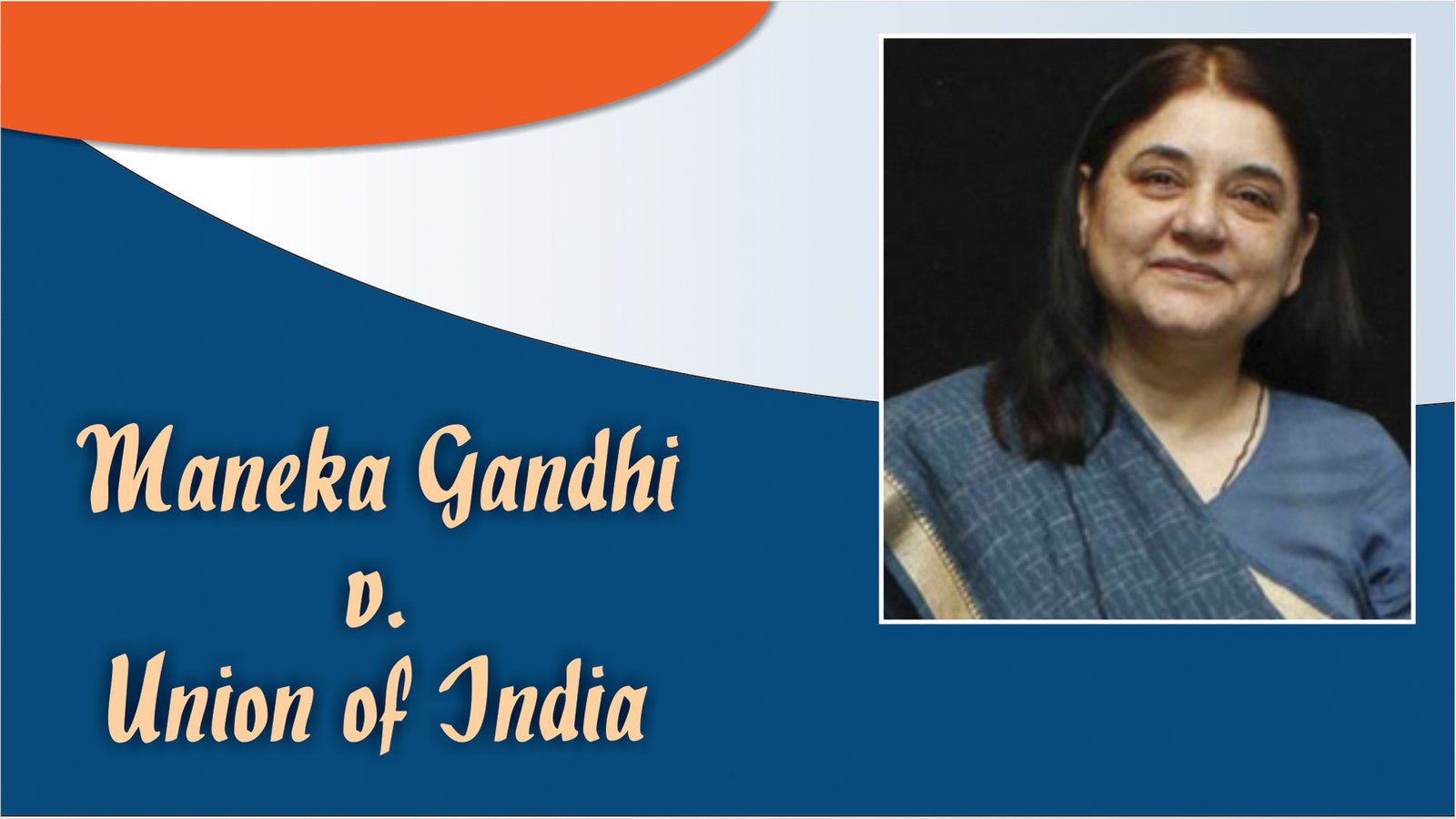
The Menaka case of 1978 formally known as Menaka Gandhi versus Union of India stands as a turning point in the constitutional history of India. It transformed the understanding of personal liberty and gave a dynamic and humane meaning to fundamental rights. Decided during a phase when Indian democracy was recovering from the experience of Emergency the case re established faith in constitutional morality judicial independence and civil liberties. For aspirants of civil services examinations this judgment is essential because it redefined Article 21 and linked it with Articles 14 and 19 thereby shaping modern rights based governance in India.
Background and Context
In the years following independence the Indian judiciary initially adopted a narrow interpretation of fundamental rights. The Gopalan case had limited Article 21 to procedure established by law without examining the fairness of such procedure. This approach prevailed for nearly three decades. The socio political context of the nineteen seventies however demanded a reassessment. The Emergency period had exposed the vulnerability of individual freedoms when state power remained unchecked.
Menaka Gandhi a journalist had her passport impounded by the government under the Passport Act of 1967 in the interest of the general public. No reasons were initially provided and she was asked to surrender her passport. She challenged this action before the Supreme Court claiming violation Job of her right to personal liberty freedom of movement and freedom of speech and expression. The case thus raised fundamental questions regarding the scope of state power and the meaning of due process in Indian constitutional law.
Current Scenario
Though the Menaka judgment dates back to 1978 its influence is deeply visible in contemporary constitutional debates. Courts today routinely rely on its principles while adjudicating matters related to privacy dignity travel rights fair procedure and state accountability. Recent judicial decisions on privacy surveillance free speech and procedural safeguards reflect the legacy of this case. Discussions in public policy forums and academic writings often cite the Menaka principle while examining governance reforms and citizen centric administration. The case remains a living precedent rather than a historical artifact.
Government Policies and Legal Provisions
The judgment revolved around the interpretation of several constitutional provisions.
Article 21 which guarantees protection of life and personal liberty
Article 14 which ensures equality before law and protection against arbitrariness
Article 19 which provides various freedoms including movement and expression
The Passport Act of 1967 was the statutory framework under challenge. The Supreme Court held that any law depriving a person of personal liberty must satisfy three conditions. It must prescribe a procedure. The procedure must be fair just and reasonable. It must not be arbitrary or oppressive. The Court also ruled that fundamental rights are not isolated but interconnected and must be read together.
Challenges and Issues
One challenge highlighted by the case was the absence of explicit due process language in the Constitution. The judiciary had to evolve this concept through interpretation.
Another issue was the balance between individual liberty and state interests such as security and public order.
Administrative discretion without transparency was exposed as a threat to civil liberties.
There was also the challenge of ensuring consistency in judicial interpretation across cases.
Implementing fair procedure uniformly across administrative actions remains difficult.
The judgment raised expectations from governance systems which require capacity and accountability.
Way Forward
The principles laid down in the Menaka case must continue to guide governance and lawmaking. Laws affecting personal liberty should be drafted with clarity transparency and proportionality. Administrative decisions must follow principles of natural justice. Judicial review should remain robust to prevent arbitrariness. Capacity building of public officials on constitutional values is essential. Citizen awareness regarding rights and remedies can further strengthen democratic institutions.
Significance for Exams
For Prelims
Menaka Gandhi case decided in 1978
Expanded interpretation of Article 21
Linked Articles 14 19 and 21
Introduced concept of fair just and reasonable procedure
Related to Passport Act 1967
Overruled narrow interpretation of Gopalan case
Foundation of substantive due process in India
For Mains
Landmark case in evolution of personal liberty
Established inter relationship of fundamental rights
Strengthened judicial review of administrative action
Important example of post Emergency constitutional correction
Basis for later judgments on privacy and dignity
For Interview
The Maneka case humanized constitutional interpretation
It restored balance between state power and individual rights
The judgment shows judiciary adapting to democratic needs
Its relevance continues in modern governance debates
In Short
The Maneka case of 1978 redefined personal liberty in India. It expanded Article 21 and ensured that laws affecting freedom are fair reasonable and non arbitrary. The judgment remains central to India’s rights based constitutional framework.
Comments (0)
Leave a Comment