
Introduction
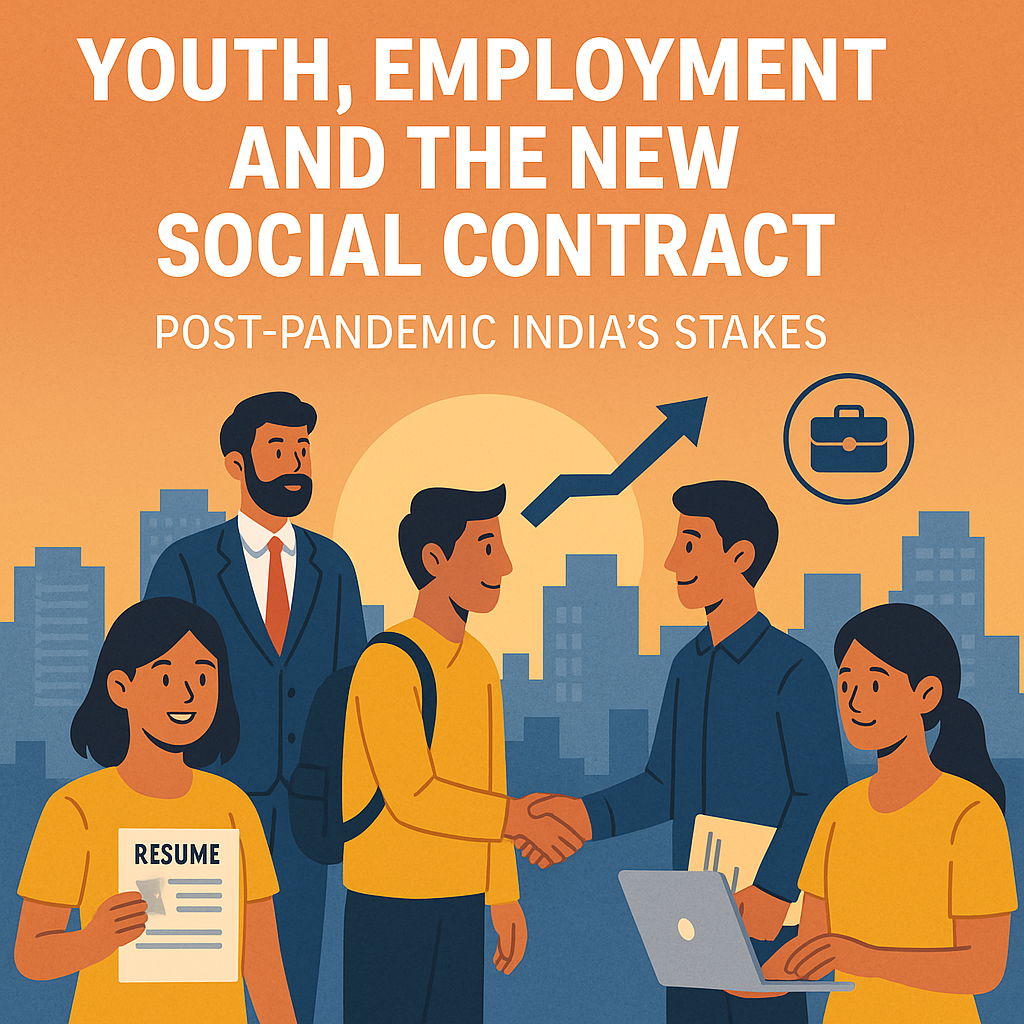
Youth employment in India is a critical component of the nation’s constitutional vision of social justice and economic development, reflecting constitutional directives such as Article 41 (right to work), Article 39 (equal opportunity), and Article 21 (right to life with dignity). The Covid-19 pandemic exacerbated existing employment challenges, compelling a rethinking of the social contract between the state and its young citizens to ensure inclusive growth, stability, and opportunity.
Background & Context
Historically, India’s youthful demographic represented a potential dividend, but persistent unemployment and underemployment have dampened this opportunity. The country has faced structural challenges in linking education, skill development, and job creation. Post-pandemic recovery efforts have focused on skilling, entrepreneurship encouragement, and digital job markets as vehicles to revive youth employment. Policy initiatives such as Skill India Mission (2015) and Startup India (2016) have sought to harness this demographic energy.
Current Scenario
As of 2025, youth unemployment remains a pressing concern. National surveys indicate a youth unemployment rate around 13.8% with urban youth rates significantly higher at about 17.2%. Disparities exist across gender and rural-urban divides, with urban female youth unemployment alarmingly high at approximately 23.7%. Despite some positive employment growth in startups and digital sectors, nearly 1 in 7 youth actively seeking work remain jobless. The government’s efforts include massive skill development programs, entrepreneurship support, and improved digital infrastructure to mitigate these gaps.
Government Policies & Legal Provisions
Key schemes and laws impacting youth employment include:
-
Skill India Mission (2015) aiming to train millions in relevant vocational skills.
-
Pradhan Mantri Kaushal Vikas Yojana offering certification and placements.
-
Startup India initiative facilitating entrepreneurship via funding, incubation, and regulation relaxation.
-
Labour Laws Reforms to enhance ease of doing business.
-
National Career Service Portal linking job seekers and employers.
-
MGNREGA providing rural employment guarantees.
-
Constitutional Articles: 41, 39, 21 ensuring right to work, equitable opportunity, and life with dignity.
Challenges / Issues
-
Skill Mismatch: Large gaps between educational curricula and market demands undermine employability.
-
Gender Disparities: High female youth unemployment, especially in urban areas, points to social and structural hurdles.
-
Informal Sector Dominance: Majority work in unorganized sectors without job security, benefits, or formal recognition.
-
Digital Divide: Limited access to digital tools and training restricts youth participation in emerging job markets.
-
COVID-19 Impact: Economic shocks disproportionately affected youth employment in sectors like retail, hospitality, and manufacturing.
-
Policy Implementation Gaps: Fragmented coordination and outreach limit scheme effectiveness in remote and marginalized communities.
Way Forward
-
Enhance Skill Development: Align vocational training with future-ready skills in IT, green jobs, and manufacturing.
-
Promote Women’s Employment: Targeted interventions to reduce barriers and enhance women’s labor force participation.
-
Formalize Informal Sector: Extend social security and legal protections to informal workers.
-
Expand Digital Access: Improve internet infrastructure and digital literacy with focus on rural youth.
-
Integrate Job Creation and Entrepreneurship: Boost startup ecosystems and MSME support to absorb youth labor.
-
Strengthen Inter-Ministerial Coordination: Seamless execution of employment schemes with uniform data and outreach.
Significance for Exams
For Prelims:
-
2015: Launch of Skill India Mission.
-
2016: Startup India initiative.
-
23.7%: Urban female youth unemployment rate approx.
-
13.8%: National youth unemployment rate approx. 2025.
-
Pradhan Mantri Kaushal Vikas Yojana (PMKVY).
-
National Career Service Portal.
-
Article 41, Article 39, Article 21 of the Constitution.
-
MGNREGA employment guarantee scheme.
For Mains:
-
Skill mismatch and employability challenges.
-
Case study: Startup India fostering entrepreneurial employment.
-
Gender disparity in urban youth unemployment.
-
The role of digital inclusion in post-pandemic youth employment.
-
Policy coherence and implementation gaps.
-
Informal economy’s role in youth employment.
For Interview:
-
The pandemic exposed systemic weaknesses in youth employment that require long-term policy focus.
-
Digital literacy and women’s economic participation hold key to improving youth employment rates.
-
Entrepreneurship is an essential pillar, but requires ecosystem support and financing.
-
A new social contract demands inclusive growth for youth with dignity and security.
In Short
Post-pandemic India’s youth employment is at a critical juncture, demanding integrated policies that build skills, foster entrepreneurship, and bridge social divides, ensuring the demographic dividend translates into a development dividend.

Comments (0)
Leave a Comment