
Introduction
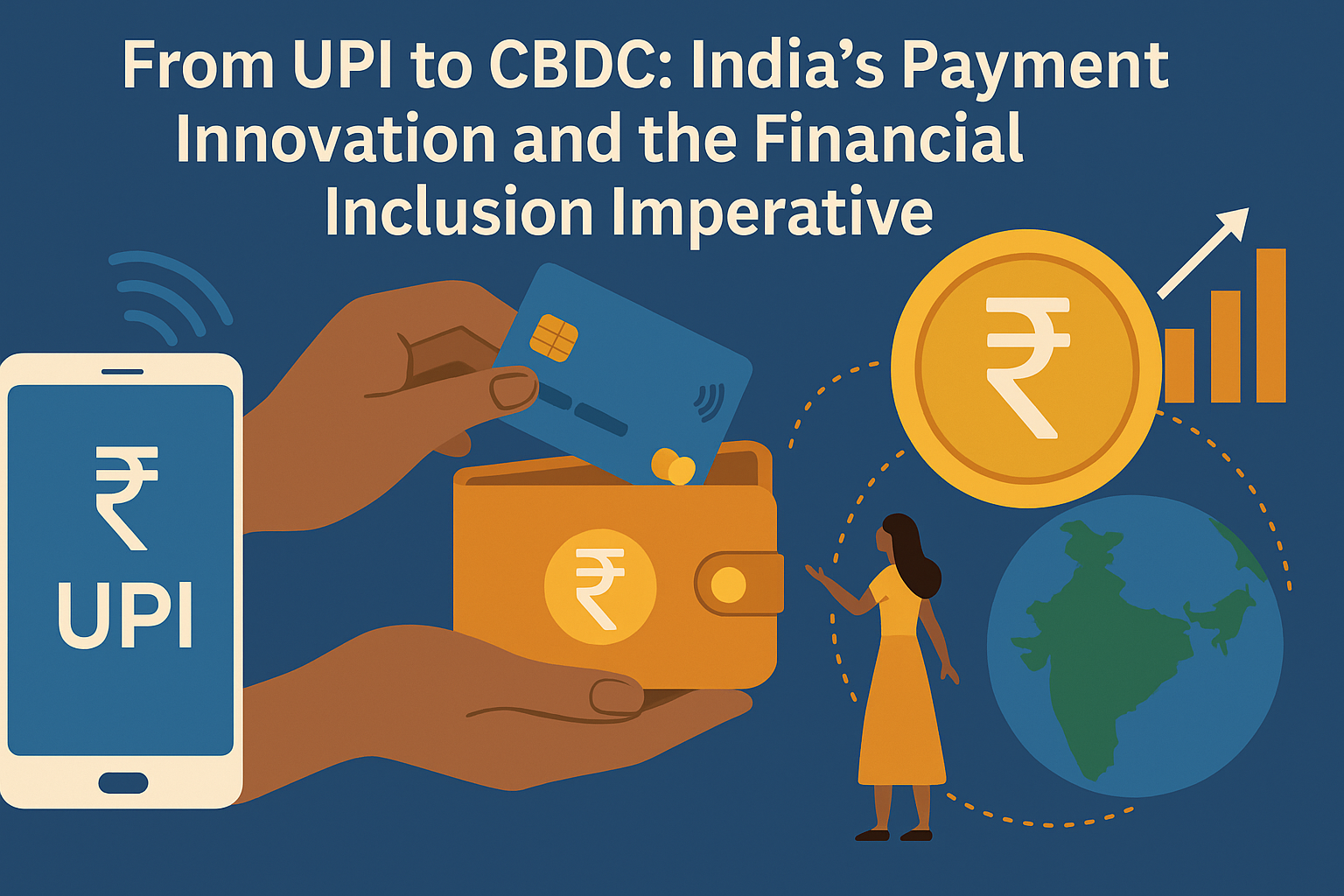
India’s steady march toward digital payment innovation stands at the intersection of technology, policy, and social equity. From the widespread adoption of the Unified Payments Interface (UPI) to the emerging paradigm of Central Bank Digital Currency (CBDC), the nation’s focus on financial inclusion and transparency reflects constitutional goals embedded in Article 39 (right to adequate means of sustenance), Article 19 (freedom to trade and business), and Article 21 (right to livelihood). Payment platforms serve as active levers of equitable development, especially for marginalized sections, small businesses, and rural populations.
Background & Context
India’s payment landscape has evolved rapidly since the launch of UPI by the National Payments Corporation of India (NPCI) in 2016. Previous decades were shaped by traditional banking, physical cash, and plastic card usage. Milestones such as NEFT, RTGS, and IMPS paved the way for faster, interoperable systems, but only UPI delivered true real-time, low-cost, and universally accessible transactions. Over the last decade, India’s financial sector witnessed a digital revolution through Jan Dhan, Aadhaar, and Mobile (JAM) trinity, Pradhan Mantri Jan Dhan Yojana, and post-2016 demonetization initiatives. The introduction of CBDC by the Reserve Bank of India in 2022-23 marks a new phase: sovereign digital money, programmable and usable beyond the constraints of legacy payment rails.
Current Scenario
India leads globally in real-time transactions, with nearly 250 billion UPI transactions worth US$3.4 trillion processed annually (2025). UPI now accounts for 85% of all retail payment volumes and is integrated with over 673 banks and platforms. Festivals, government payments, and salary inflows drive monthly records, and UPI handles more than Rs 25 lakh crore in transaction value per month as of October 2025. Parallelly, credit card and e-wallet usage is steady but overshadowed by UPI’s ease, success rate (~99%), and outreach. The rollout and piloting of CBDC, starting with wholesale and retail trials, has seen limited but growing adoption among select banks and merchants. Policy circles discuss the interoperability of CBDC with UPI and its possible role in cross-border payments, subsidy transfers, and fiscal management.
Government Policies & Legal Provisions
India’s payment ecosystem is shaped by:
-
Payment and Settlement Systems Act, 2007
-
RBI’s CBDC policy framework (2022 onwards)
-
NPCI guidelines for UPI
-
India’s Financial Inclusion Plan (since 2015)
-
Pradhan Mantri Digital Payment Promotion Scheme
-
Aadhaar Payments Bridge System (APBS)
-
Jan Dhan Yojana and JAM trinity integration
-
Data protection regulations under the Personal Data Protection Act (draft as of 2023)
-
Inter-ministerial coordination for linking government benefits and welfare to digital platforms
Challenges / Issues
-
Digital Divide: Uneven access to smartphones, internet connectivity, and digital literacy still limits payment innovation in remote and rural locations.
-
Privacy and Security: Increased digital transactions raise concerns about fraud, cyber-attacks, and data protection.
-
Regulatory Risks: Lack of harmonization between UPI, wallets, and CBDC platforms may cause confusion, barriers, or risks of systemic instability.
-
Cost and Scalability: Small merchants and low-income users may face friction from transaction fees, device costs, or onboarding challenges.
-
Ecosystem Interoperability: Integrating CBDC with existing payment pipelines (UPI, IMPS, NEFT) is technologically and legally complex.
-
Behavioral Barriers: Cash remains resilient as a trustful medium, especially for small-value transactions and older demographics.
Way Forward
-
Expand Digital Literacy and Rural Connectivity: Aggressive infrastructure push for mobile and internet access, alongside digital payment training, in rural and remote areas.
-
Strengthen Privacy Protocols: Mandatory encryption, two-factor authentication, and improved data protection rules for payments systems.
-
Foster Platform Synergy: Seamless interoperability across UPI, CBDC, and other payment channels through unified standards.
-
Reduce Costs for Inclusion: Zero/minimal merchant discount rates, government subsidies for device procurement, and fee waivers for low-income users.
-
Monitor and Regulate: Adapt regulatory frameworks continually to address new risks as transactions scale up.
-
Promote Trust: Awareness campaigns and simplified processes to build confidence among rural clients and senior citizens.
Significance for Exams
For Prelims:
-
2016: UPI launch year (NPCI)
-
2023: CBDC pilot rollout (RBI)
-
Payment and Settlement Systems Act, 2007
-
Pradhan Mantri Digital Payment Promotion Scheme
-
JAM trinity implementation
-
NPCI (nodal institution for UPI)
-
APBS: Aadhaar Payments Bridge System
-
Personal Data Protection Act (draft status 2023)
For Mains:
-
Case study: UPI and Direct Benefit Transfer reach in rural Bihar
-
Debate: Comparing UPI and CBDC for transparency and inclusion
-
Examples: RBI’s phased CBDC pilots among select banks
-
Policy: Data protection, interoperability, and regulatory agility for payments
-
Analysis: Addressing the urban-rural digital gap in financial access
For Interview:
-
Payment innovation (UPI, CBDC) is crucial for financial inclusion, speed, and transparency.
-
India’s success stems from public-private partnership and infrastructure expansion.
-
Ongoing challenges remain around security, inclusion, and user trust; policy adaptability is key.
In Short
India’s journey from UPI to CBDC exemplifies how payment innovation can deepen financial inclusion, drive economic growth, and empower citizens. Future success hinges on bridging divides and ensuring security, trust, and accessibility






Comments (0)
Leave a Comment