
Introduction
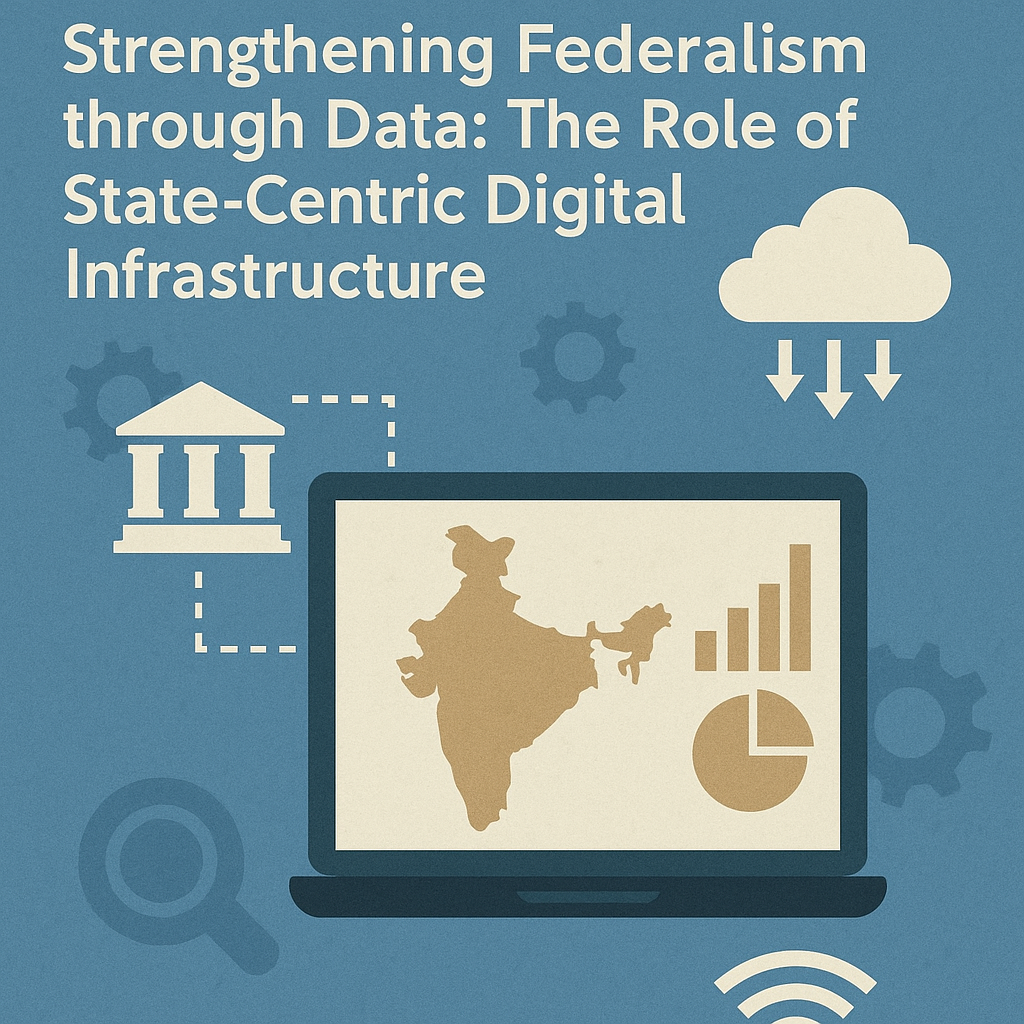
The issue of federalism in India centers on balancing power and responsibilities between the Union and State governments. In the digital age, the emergence of state-centric digital infrastructure has become a vital tool for deepening federal principles inherent in India’s Constitution. Data-driven governance offers pathways for more transparent, accountable, and inclusive policy delivery. Central to this process are Articles 1, 246, and the Seventh Schedule, which delineate the powers and roles within India’s federal framework and underscore the need for equitable technology adoption across regions.
Background & Context
India’s journey towards digital empowerment began with e-governance initiatives in the late 1990s, evolving through major milestones such as the National e-Governance Plan (NeGP), Digital India Mission, and formation of Digital Public Infrastructure (DPI). Historically, many policies centralized technological oversight, with states playing limited roles. However, reforms such as State Data Centres, State-Wide Area Networks (SWANs), and the rise of State Digital Missions have gradually empowered states with both resources and technical autonomy. Competitive federalism has also prompted states like Karnataka, Kerala, and Telangana to pioneer sectoral digital solutions, ranging from agriculture and education to healthcare and urban planning.
Current Scenario
India’s federal digital infrastructure now serves over 1.3 billion citizens, processing more than 10 billion transactions monthly as of 2025. More than 300 government departments utilize cloud services, with states designing tailored platforms for public service delivery. COVID-19 further accelerated digital infrastructure, prompting states to adopt real-time dashboards, e-vigilance platforms, and local language apps for health, education, and social welfare. Reports from The Hindu and The Indian Express highlight successes like Aadhaar-enabled service delivery, state e-governance clouds, and sectoral dashboards that reflect data-driven federal collaboration.
Government Policies & Legal Provisions
Several key government policies and acts shape the state-centric digital paradigm:
-
Digital India Mission emphasizes digital infrastructure as a utility for every citizen.
-
The National Broadband Plan and BharatNet Project prioritize last-mile connectivity supporting rural states.
-
Information Technology Act, 2000 (with 2008 amendments) regulates digital governance, supported by state-specific IT policies.
-
UIDAI and NPCI exemplify statutory independence and multi-stakeholder governance.
-
State Data Policy frameworks encourage decentralized data management and protection, aligned with the Personal Data Protection Act (latest draft 2023).
-
The central government also encourages open APIs, interoperability, and modular platforms—ensuring state adaptability.
Challenges / Issues
-
Resource Disparities: Many states face unequal access to funding and skilled manpower, impacting the pace of digital development.
-
Data Silos and Fragmentation: Lack of standardization and limited cross-state data sharing hinder pan-India insights.
-
Cybersecurity and Privacy: Expanding digital platforms increases vulnerability to breaches, necessitating robust cyber defenses and legal safeguards.
-
Capacity and Skill Gaps: Insufficient training, especially in backward and rural states, restricts effective infrastructure utilization.
-
Intergovernmental Coordination: Varying policy priorities and limited data interoperability sometimes hamper collaborative governance.
-
Political and Bureaucratic Resistance: Adoption can be slowed by legacy systems, risk aversion, and resistance to change within administrative structures.
-
Equity and Inclusion: Ensuring digital benefits reach marginalized groups (women, SC/ST, remote populations) requires intentional policy design.
Way Forward
-
Strengthen State Digital Missions: Decentralize technical and financial support to states for innovation and capacity building.
-
Foster Interoperable Data Ecosystems: Adopt national standards for data exchange while respecting state-level autonomy and privacy requirements.
-
Invest in Digital Literacy: Extensive training, awareness, and inclusion initiatives targeting officials and citizens, especially in underserved regions.
-
Enhance Security and Privacy: Upgrade cyber defense protocols and implement robust legal protections for state-held citizen data.
-
Incentivize Collaboration: Promote competitive federalism through performance-linked grants and national awards for digital excellence.
-
Policy Experimentation (Regulatory Sandboxes): Allow states autonomy to pilot and scale tech solutions suited to local needs.
-
Monitor and Evaluate: Systematic, transparent review mechanisms for digital projects, feeding lessons into future policy design.
Significance for Exams
For Prelims:
-
2006: National e-Governance Plan launch year.
-
2014: Digital India Mission commencement.
-
BharatNet Project (rural connectivity).
-
IT Act, 2000; amendment year 2008.
-
UIDAI and NPCI: example digital institutions.
-
State Data Centres and SWANs: State-centric infrastructural schemes.
-
Personal Data Protection Act: key legal framework (latest draft 2023).
-
Seventh Schedule, Constitution: division of powers.
For Mains:
-
Analysis: Role of state-led digital dashboards during COVID-19 management.
-
Case study: Kerala’s eHealth platform, Telangana’s T-Fiber broadband.
-
Challenge: Managing disparities across states in digital infrastructure.
-
Government framework: BharatNet enabling rural-urban digital integration.
-
Debate: Balancing central oversight with state-level innovations.
For Interview:
-
State-centric digital infrastructure can enhance both transparency and inclusivity in Indian federalism.
-
Coordinated, interoperable systems drive efficiency, but protecting privacy and equity are critical for success.
-
Progressive states provide models for others, but policy must address resource and skill inequalities.
In Short
Robust state-centric digital infrastructure promises to strengthen India’s federal structure, boost service delivery, and empower local innovation. Achieving full benefits will require persistent attention toward equitable access, data security, and collaborative governance.










Comments (0)
Leave a Comment