
Introduction
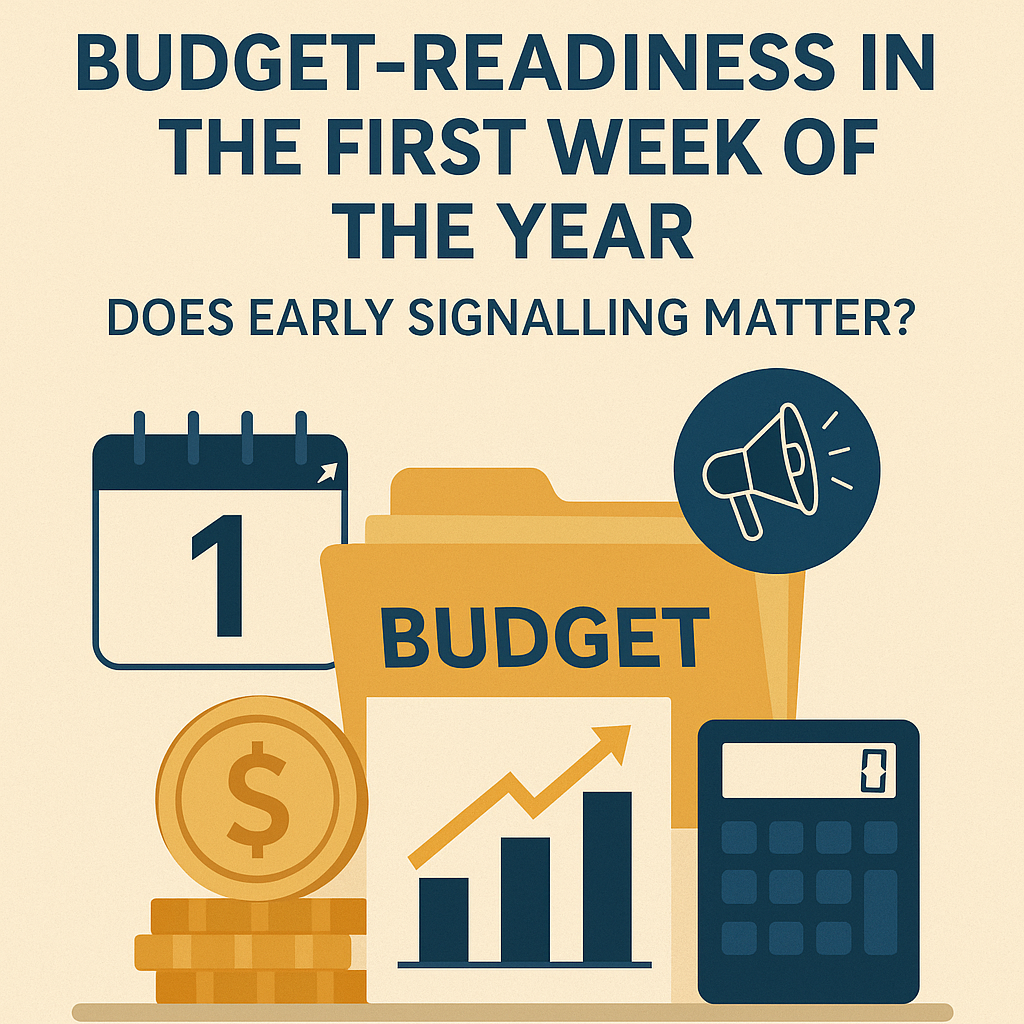
Budget-readiness at the very start of the year marks a vital touchpoint in India’s fiscal calendar. The annual budget shapes economic policy, development priorities, and public welfare objectives linked with constitutional duties under Articles 112 and 266. Early signalling—through pre-budget discussions and fiscal projections—anchors expectations across ministries, states, businesses, and citizens. The phenomenon embodies India’s constitutional commitment to procedural transparency, democratic planning, and efficient resource allocation.
Background & Context
Historically, India presented the Union Budget at the end of February, a legacy of colonial procedural alignment with London time zones. In 1997, the time shifted to 11 AM, and since 2017, the budget date moved to February 1. This reform, aligned with best practices globally, enables faster parliamentary scrutiny and a seamless beginning to the financial year on April 1. Early signalling through the first week—economic surveys, pre-budget consultations, and estimates—ensures stakeholders can reposition plans, anticipate changes, and harmonize operations with government priorities.
Current Scenario
In recent cycles, the Finance Ministry starts pre-budget consultations as early as October, with the Economic Survey presented on January 31 and the Budget on February 1. In 2025, this approach has continued, with pre-budget discussions and stakeholder submissions processed by January 6. Such readiness allows ministries, states, and public bodies to align internal targets, resourcing, and schemes. Data shows more than 60% of state budget estimates now reference Union projections by mid-January, leading to improved synchrony in national and sub-national finances. News reports confirm early announcements on growth forecasts, tax trends, and priority sectors (health, infrastructure, green energy) have stabilized market reactions and policy debates.
Government Policies & Legal Provisions
Key policies reinforcing budget-readiness include:
-
Article 112 (Annual Financial Statement/Budget)
-
Article 266 (Consolidated Fund of India)
-
Fiscal Responsibility and Budget Management (FRBM) Act, 2003
-
Union and State Budget Manuals
-
Advance Estimates released by Central Statistics Office (CSO)
-
Economic Survey mapping sectoral trends
-
Finance Ministry pre-budget meetings and notifications
Challenges / Issues
-
Data Integrity and Forecasting: Early signalling depends on timely and robust macroeconomic data, which may lag or be inconsistent, affecting projections and fiscal discipline.
-
Coordination Gaps: Central and state fiscal calendars may not always sync, causing delays in scheme launches and fund releases.
-
Policy Volatility: Geopolitical events and global market shocks can disrupt initially signalled economic targets.
-
Inclusion and Stakeholder Engagement: Early processes sometimes privilege large entities, marginalizing MSMEs, civil society, and smaller states.
-
Administrative Capacity: Many departments face shortages in trained personnel and digital infrastructure for swift readiness.
-
Communication Risks: Premature announcements may cause speculation or unintended market reactions if not adequately clarified.
Way Forward
-
Strengthen Real-Time Data Systems: Invest in digital tools and platforms for faster, more reliable economic, demographic, and fiscal data.
-
Institutionalize Early Consultations: Formalize inter-ministerial, sub-national consultations and stakeholder outreach for more inclusive budget-making.
-
Synchronize Fiscal Calendars: Align Centre and State timelines for estimates, demands, and fund flows to maximize policy impact.
-
Enhance Capacity: Upskill officials in financial planning, data management, and participatory approaches.
-
Controlled Transparency: Establish clear, phased communication strategies with regular updates to avoid premature speculation.
-
Adaptive Mechanisms: Create buffers and contingency planning for unforeseen economic changes after early signalling.
Significance for Exams
For Prelims:
-
1997: Shift from 5 PM to 11 AM budget time.
-
2017: Presentation changed to February 1.
-
Article 112 (Annual Financial Statement/Budget).
-
Article 266 (Consolidated Fund of India).
-
FRBM Act, 2003.
-
Economic Survey release date: January 31.
-
CSO Advance and Revised Estimates.
-
Finance Ministry’s pre-budget consultation process.
For Mains:
-
Impact of early budget signalling on fiscal discipline and planning.
-
Case study: State governments and synchronizing local budgets.
-
Debate: Transparency vs. market volatility in budget communications.
-
Analysis: Role of Economic Survey in guiding budget priorities.
-
Policy: FRBM and its enforcement in early budget projections.
For Interview:
-
Early budget-readiness aligns fiscal strategy and enhances administrative efficiency.
-
Synchronization between Union and State budgets improves resource utilization and public welfare.
-
Balanced early signalling can aid stability but needs robust data and careful communication.
In Short
Early budget-readiness and signalling in the first week set the tone for transparent, predictable, and effective fiscal governance. Success depends on strong data, inclusive consultations, synchronized calendars, and adaptive strategies.







Comments (0)
Leave a Comment