
Background
The Indian National Movement was not a sudden revolution but
a long-drawn struggle spanning more than six decades. It evolved gradually
through different phases reflecting the political awakening and maturity of
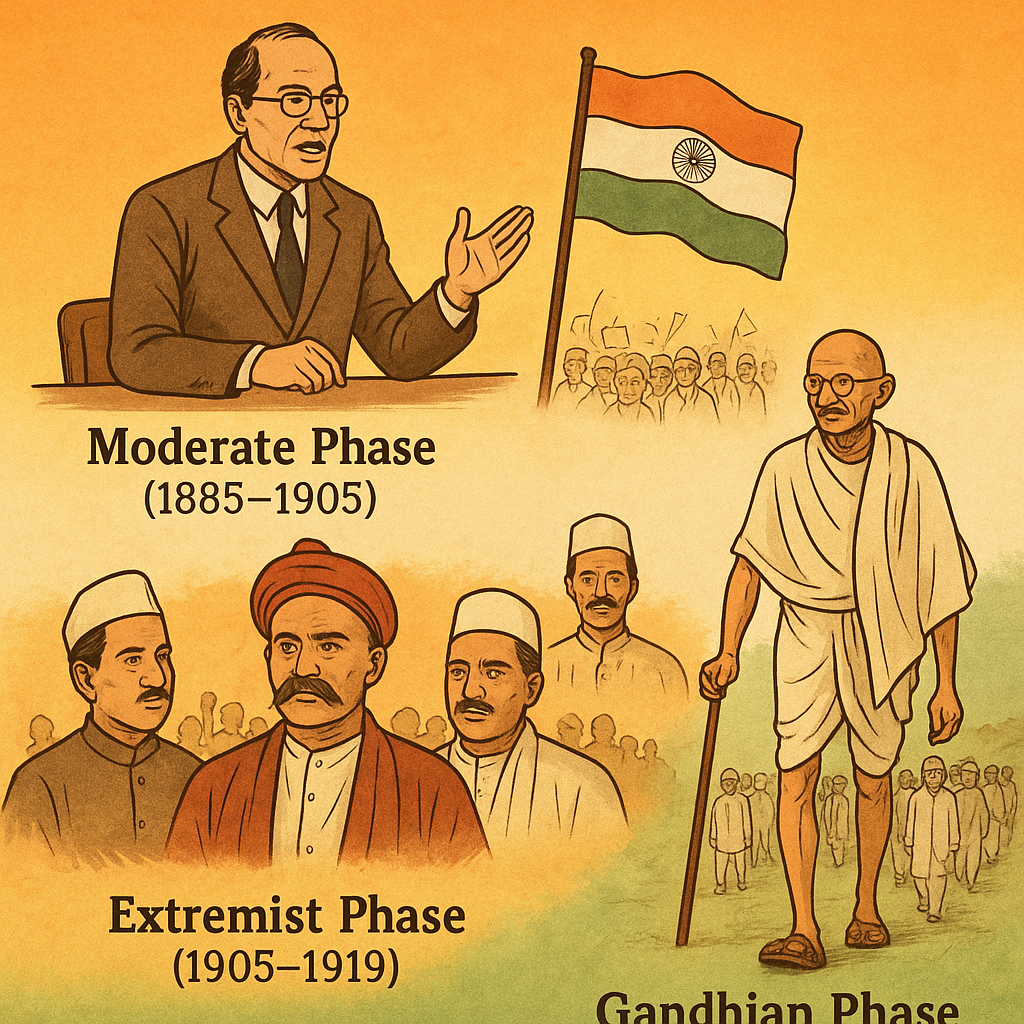
Indian society. The movement can be divided into three main phases — the
Moderate Phase (1885–1905), the Extremist Phase (1905–1919), and the Gandhian
Phase (1919–1947). Each phase had distinct leaders, methods, and objectives,
but the common goal remained the same — the freedom of India from British rule.
Main Provisions and Key Facts
- Moderate
Phase (1885–1905)
- This
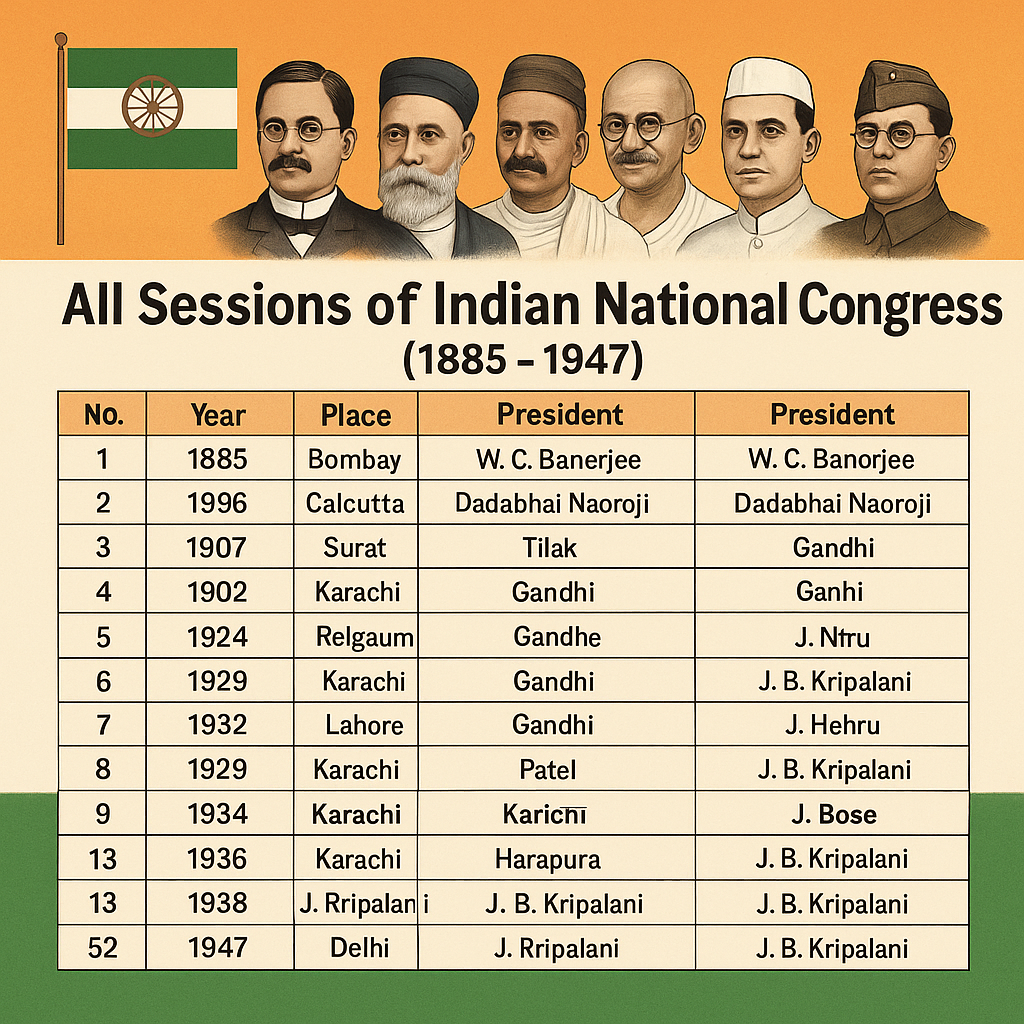
phase began with the formation of the Indian National Congress (INC) in
1885 by A.O. Hume.
- The
major leaders were Dadabhai Naoroji, Surendranath Banerjee, Pherozeshah
Mehta, Gopal Krishna Gokhale, and Anand Charlu.
- Known
as the “Moderates” or “Naram Dal”, their approach was constitutional and
loyal to the British Crown.
- They
believed in petitions, resolutions, and meetings to demand reforms.
- Major
demands included Indian representation in the Legislative Councils, civil
service reforms, reduction in land revenue, and expansion of education.
- Dadabhai
Naoroji’s theory of the “Drain of Wealth” became the intellectual
foundation for national awakening.
- Extremist
Phase (1905–1919)
- This
phase began with the Partition of Bengal in 1905, which aroused
strong nationalist feelings.
- The
leaders were Bal Gangadhar Tilak, Bipin Chandra Pal, and Lala Lajpat Rai
— collectively known as “Lal, Bal, Pal”.
- Known
as the “Extremists” or “Garam Dal”, they believed that freedom could only
be achieved through struggle, self-reliance, and direct action.
- They
advocated for “Swaraj” as a birthright and promoted Swadeshi (use of
Indian goods) and Boycott (of British goods) movements.
- Tilak
used festivals like Ganesh Utsav and Shivaji Jayanti to spread
nationalism.
- This
period also saw the rise of revolutionary activities and secret
societies.
- The
1916 Lucknow Pact united the Moderates, Extremists, and Muslim League,
paving the way for future cooperation.
- Gandhian
Phase (1919–1947)
- Marked
by the leadership of Mahatma Gandhi, this phase transformed the
freedom struggle into a mass movement.
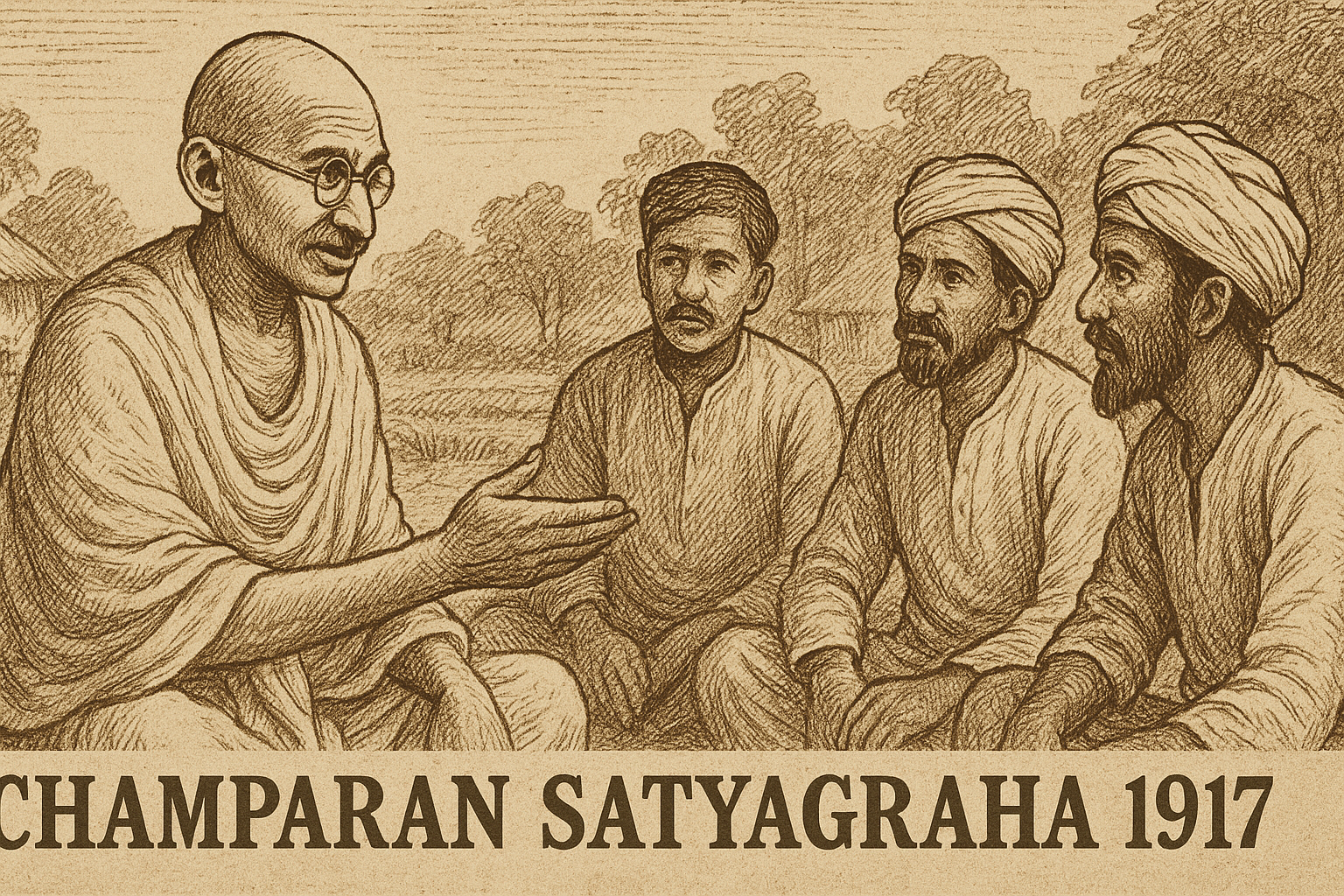
- Gandhi
introduced the methods of Non-Violence (Ahimsa) and Satyagraha
(truthful resistance).
- Major
movements launched during this period:
a. Non-Cooperation Movement (1920–22)
b. Civil Disobedience Movement (1930–34)
c. Quit India Movement (1942) - Other
significant events: Jallianwala Bagh massacre (1919), Dandi March (1930),
Round Table Conferences (1930–32).
- The
role of Subhas Chandra Bose and the Indian National Army (INA) also
became significant towards the end.
- Ultimately,
India attained independence on 15 August 1947.
Significance
- The
three phases reflect the evolution of political thought from loyal
reformism to mass struggle.
- They
show how nationalism deepened — from urban elites to peasants, women, and
workers.
- The
Gandhian phase gave a moral and spiritual dimension to the freedom
struggle, making it unique in world history.
- The
movement built a democratic, secular, and united foundation for
independent India.
Criticism or Limitations
- The
Moderate phase was criticized for being too submissive and slow.
- Extremist
leaders, though passionate, lacked organizational unity and clear
long-term strategy.
- Gandhian
methods, while moral, were sometimes criticized for being too idealistic
and for withdrawing movements abruptly (e.g., after Chauri Chaura
incident).
Key Points for Exams
- Indian
National Congress founded: 1885 by A.O. Hume
- Partition
of Bengal: 1905
- Slogan
“Swaraj is my birthright”: Bal Gangadhar Tilak
- Lucknow
Pact: 1916
- Non-Cooperation
Movement: 1920–22
- Civil
Disobedience Movement: 1930–34
- Quit
India Movement: 1942
- Independence:
15 August 1947
- Important
Leaders: Dadabhai Naoroji, Tilak, Lajpat Rai, Bipin Chandra Pal,
Gandhi, Nehru, Subhas Bose.
In Short
The Indian National Movement progressed through three
distinct phases —
- Moderate
(1885–1905): Reform and petition.
- Extremist
(1905–1919): Struggle and swadeshi.
- Gandhian
(1919–1947): Non-violence and mass awakening — culminating in India’s
independence.
Comments (0)
Leave a Comment