
Introduction
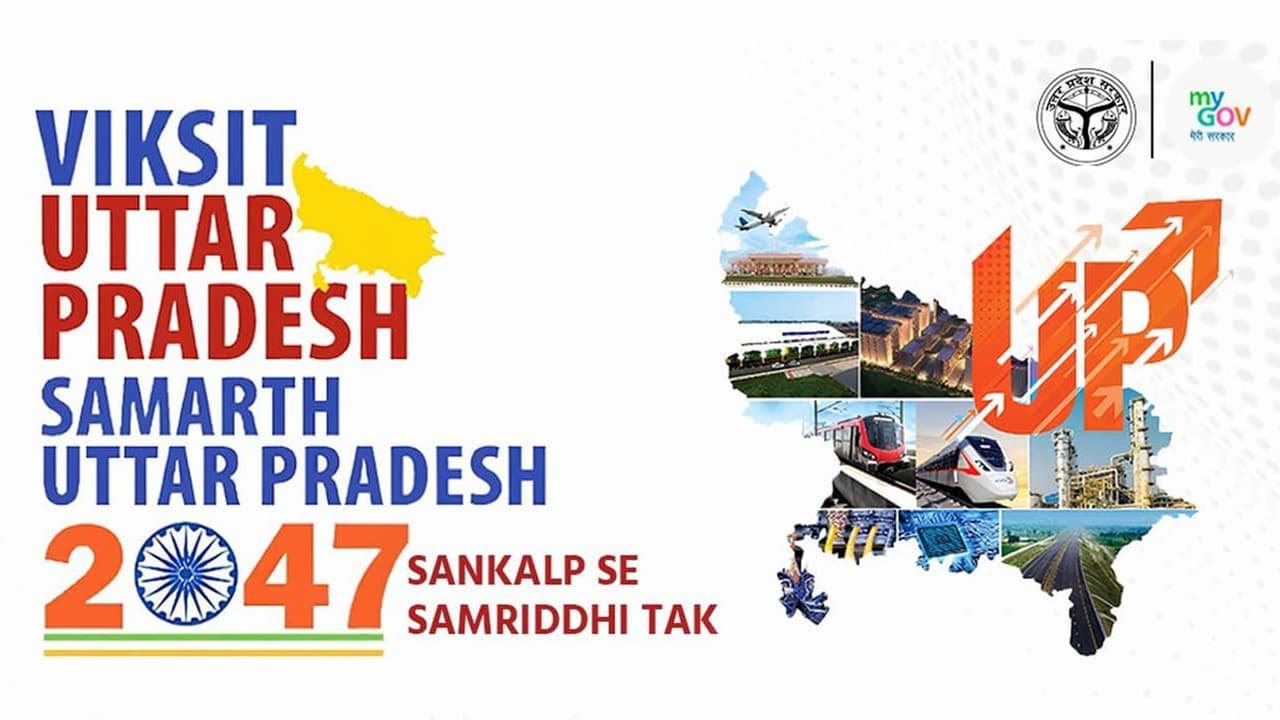
The idea of citizen participation in policy making is fundamental to a democratic society. In India, the Constitution envisions a participatory democracy where citizens are not only subjects of governance but also partners in shaping public policies. The campaign “Viksit Uttar Pradesh@2047” represents an ambitious state-level initiative aligned with India’s vision of becoming a developed nation by 2047. It aims to harness the collective wisdom, aspirations, and innovative ideas of citizens to create a roadmap for inclusive and sustainable development in Uttar Pradesh. This participatory approach reflects the spirit of cooperative federalism and citizen-centric governance envisioned in the Indian polity.
Background and Context
After independence, India adopted a representative form of democracy where people’s participation was largely through elections. However, with the evolution of governance, it became clear that electoral participation alone cannot ensure effective development. The 73rd and 74th Constitutional Amendments strengthened grassroots participation through Panchayati Raj Institutions and Urban Local Bodies. Over the years, the concept of participatory governance expanded through initiatives like the Aspirational Districts Programme, MyGov platform, and various citizen feedback mechanisms.
In this context, “Viksit Uttar Pradesh@2047” has been launched to create a long-term vision document for the state. It aligns with the national goal of “Viksit Bharat@2047”, which seeks to transform India into a developed, inclusive, and knowledge-driven economy by its centenary of independence. Uttar Pradesh, being India’s most populous state, plays a decisive role in achieving this national vision. Hence, citizen engagement becomes essential for framing realistic and locally grounded policy priorities.
Current Scenario
The Government of Uttar Pradesh has initiated extensive consultations under this campaign across sectors such as education, health, infrastructure, industry, agriculture, environment, and governance. District-level workshops, youth dialogues, academic consultations, and online surveys are being conducted to gather public inputs. The campaign integrates data from government departments, local bodies, and civil society organizations.
The state’s vision document focuses on areas such as economic growth, employment generation, urban and rural development, sustainable agriculture, renewable energy, and digital governance. Citizens are being encouraged to share their suggestions through structured platforms and interactive sessions. Such mechanisms enhance policy inclusivity and ensure that developmental planning reflects the aspirations of all social groups.
Government Policies and Legal Provisions
The constitutional foundation of citizen participation lies in several provisions. Article 38 emphasizes promoting the welfare of the people through a social order based on justice. Article 40 calls for the establishment of Panchayats as institutions of self-government, ensuring local participation in decision-making. The 73rd and 74th Amendments institutionalized decentralization, empowering local governments to plan and implement development programmes.
At the administrative level, initiatives like the MyGov portal, e-Governance Mission Mode Projects, and National Policy on Social Participation promote interactive policy formulation. In Uttar Pradesh, the “Jan Sunwai” (public hearing) and “CM Helpline” mechanisms also facilitate citizen-government interaction. The “Viksit Uttar Pradesh@2047” campaign integrates these participatory frameworks with modern tools of data-driven governance to ensure accountability and transparency.
Challenges and Issues
-
Unequal participation remains a challenge, as rural and marginalized groups often lack access to consultation platforms.
-
Limited awareness among citizens regarding policy mechanisms leads to passive involvement.
-
Bureaucratic constraints and overlapping jurisdictions may delay implementation of public suggestions.
-
Digital divide affects the participation of those without internet access, particularly in rural areas.
-
Measuring the real impact of citizen inputs in policy outcomes requires institutional mechanisms which are still evolving.
-
Coordination among various departments and stakeholders is complex in large-scale consultations.
Way Forward
-
Strengthen awareness campaigns at the village and district levels through educational institutions and local bodies.
-
Encourage community-based organizations and NGOs to act as facilitators between citizens and government institutions.
-
Develop digital literacy programmes to ensure inclusive participation in online consultations.
-
Institutionalize periodic reviews of citizen feedback implementation to enhance accountability.
-
Use technology-driven tools such as dashboards, mobile apps, and social media analytics to track progress and transparency.
-
Promote youth-led innovation and entrepreneurship as part of participatory planning for the state’s future.
Significance for Exams
For Prelims:
-
Viksit Uttar Pradesh@2047 campaign launched by Government of Uttar Pradesh in 2024.
-
It aligns with national vision of Viksit Bharat@2047.
-
Nodal coordination by State Planning Department and NITI Aayog support.
-
Article 38 and 40 promote citizen participation and local self-governance.
-
73rd and 74th Amendments institutionalize participatory governance.
-
MyGov platform launched in 2014 for national-level citizen engagement.
-
Aspirational Districts Programme focuses on outcome-based governance.
-
CM Helpline and Jan Sunwai are examples of participatory grievance mechanisms.
For Mains:
-
Demonstrates cooperative federalism and bottom-up planning.
-
Enhances accountability and transparency in governance.
-
Reflects inclusive policy-making with citizen inputs.
-
Connects local aspirations with state development priorities.
-
Case example of participatory governance in a large state.
-
Reinforces the constitutional idea of participatory democracy.
For Interview:
-
Citizen participation improves legitimacy and effectiveness of governance.
-
Public inputs make policy decisions more grounded and realistic.
-
Digital engagement can bridge the gap between government and society.
-
The success of Viksit Uttar Pradesh@2047 depends on inclusive and continuous citizen involvement.
In Short
Citizen participation in policy making is a cornerstone of good governance. The “Viksit Uttar Pradesh@2047” campaign reflects the state’s effort to create a collaborative developmental model rooted in public engagement. Building awareness, inclusivity, and institutional continuity will be essential for realizing the vision of a developed and empowered Uttar Pradesh by 2047.



Comments (0)
Leave a Comment